Price Flow Analysis — GOOG, AMZN

GOOG is preparing to jump

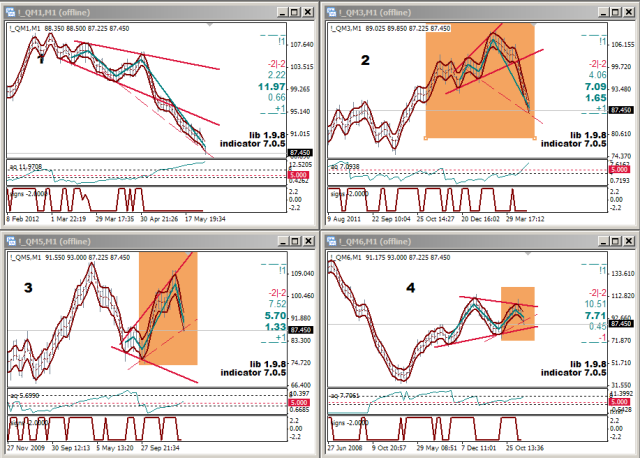
red lines represent two possible scenarios
(do not have enough data in Alpari MT4 to provide usual time-compressed charts, so can show only as is)

AMZN — oscillations with very high quality

and now we see that the last GAP was an simple continuation of the previous configuration, i.e. market has supposed it long before «the event»

probably the oscillations will continue for some time, so pullback is expected

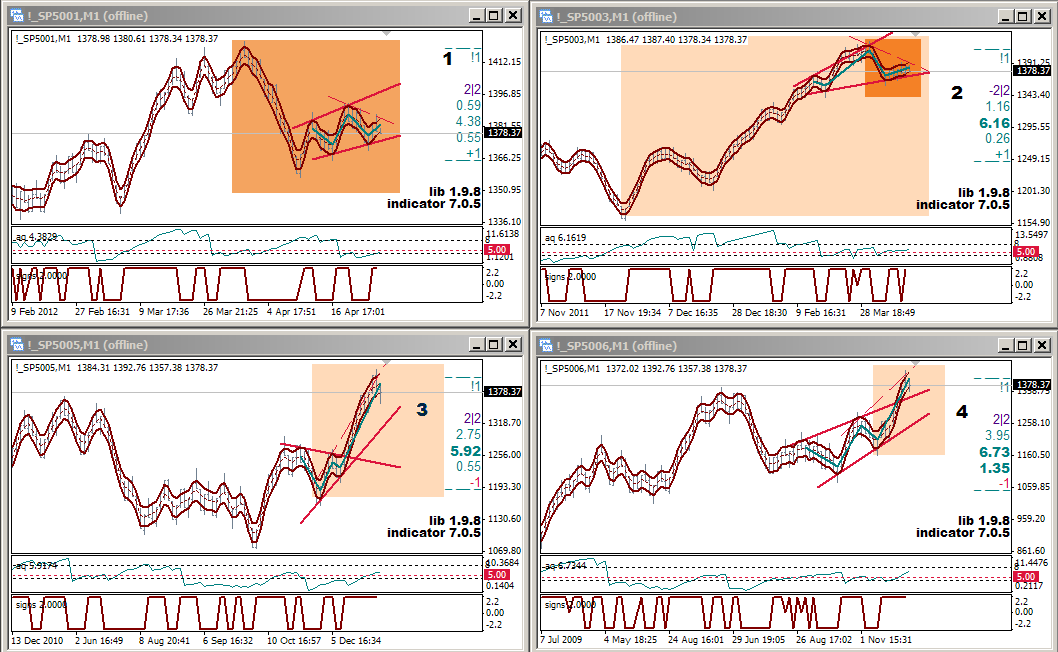
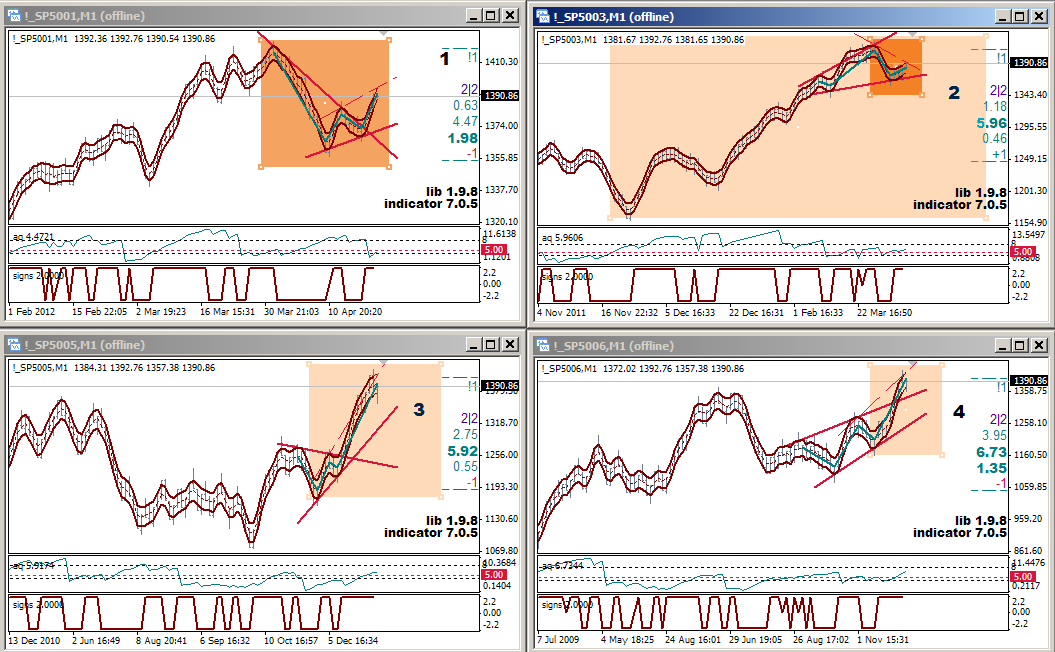
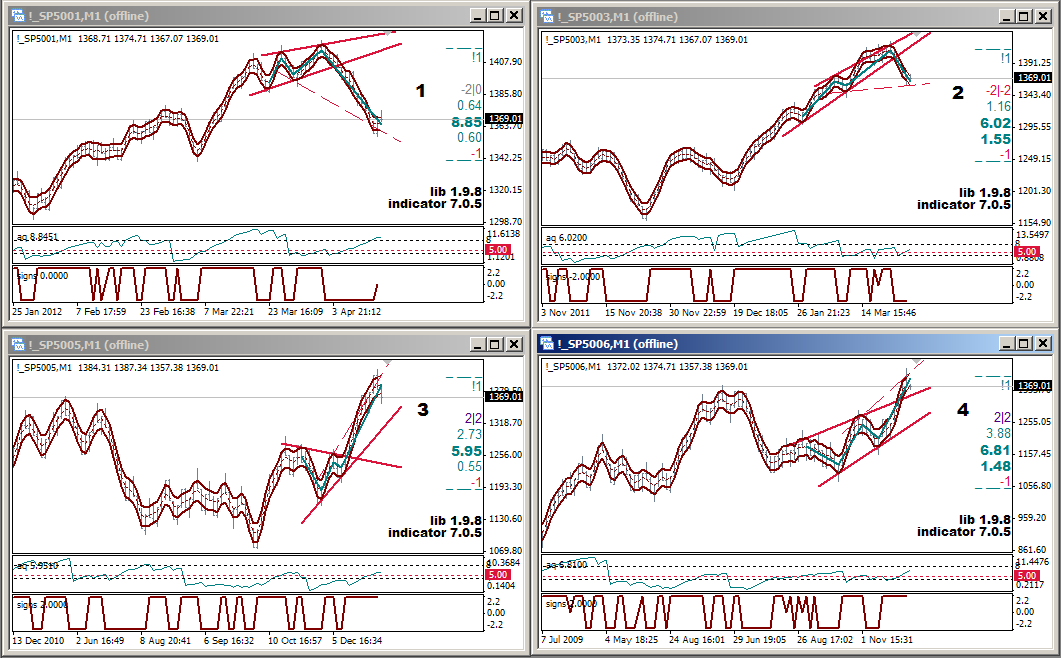
S&P-500: new — 2 boundary scenarios at scale 1

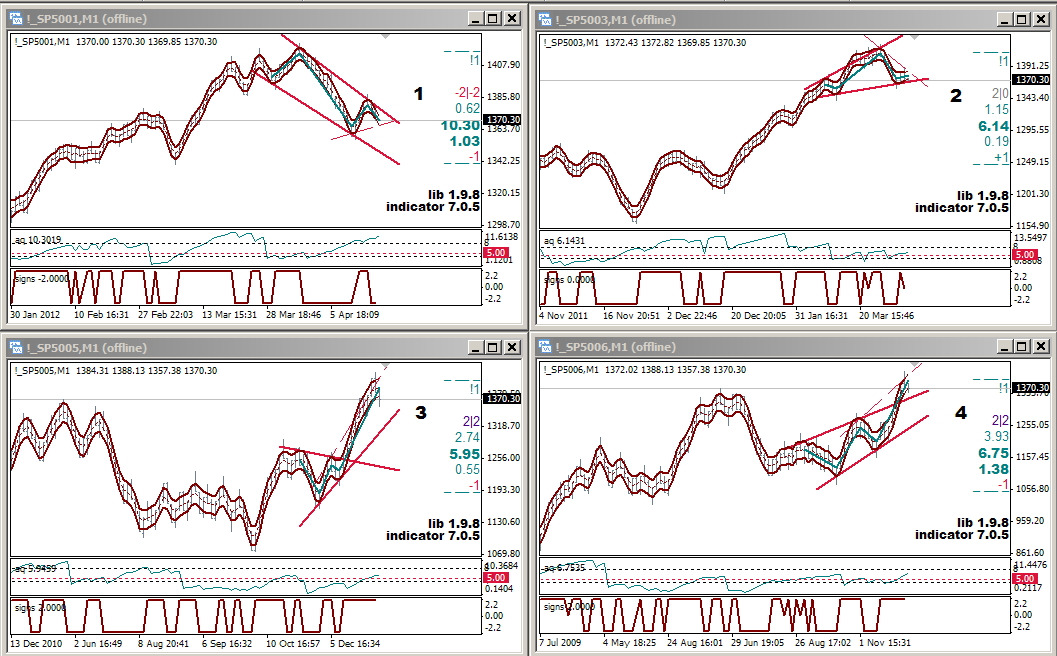
S&P-500: new — 2 boundary scenarios at scale 1

remark: because of time compression, any line drawn behind the right border of the data, becomes the line in the time-scale with unknown properties. And after new data arrive and new bar appears, all lines automatically are redrawn in MT4. So all images of the scenarios are approximate. Furthermore in the spirit of PFT — all calculations must be only estimations.

Obviously that continuation has less probability than u-turn down, but everything can be and anomaly «is all around»
like love .
http://www.youtube.com/watch?v=m_HnBac5jWs
or
http://www.youtube.com/watch?v=TQQ6SfPZggw
i like both clips

The Second Theorem SG — «theorem of oscillations»

Price flow exists only in oscillations shape: all states which seem to be «flat» are oscillations at lower scale and all states which seem to be «trend» are the oscillations at the higher scale, and the structure of all trends appears to be oscillations at lower scale.

Samples: just take a closer look at any samples for PFT, compare channels at two consecutive scales for the same «time» and you «easily» can see all flows and structures. Look so closely and so long that your eyes could see, and your brain is able to perceive it. The effect must be as it was with Neo in «The Matrix».  You will enjoy it ….

nevertheless Samples

S&P-500

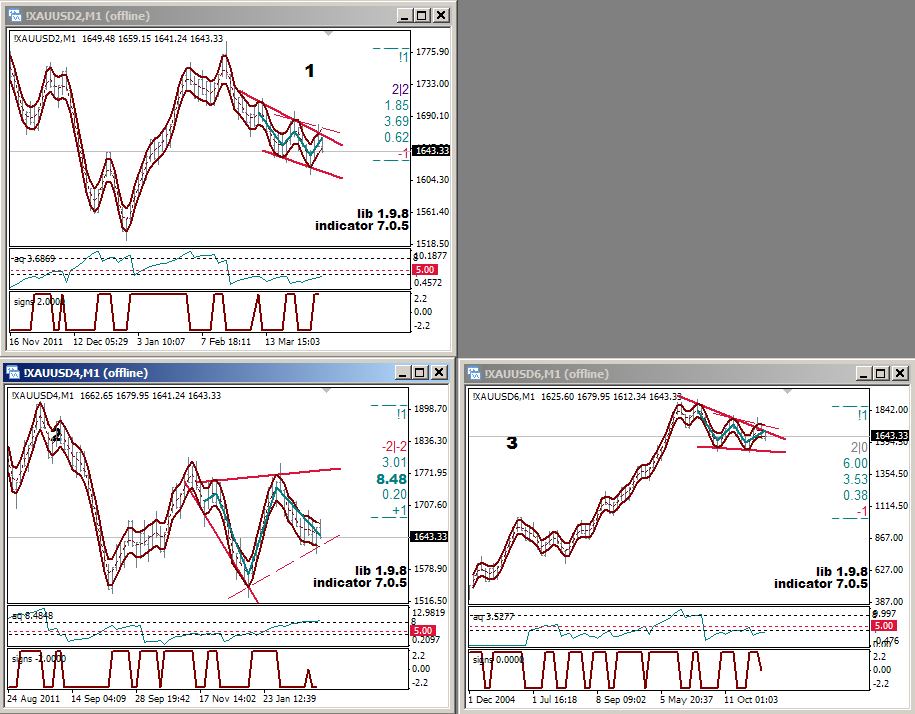
GOLD

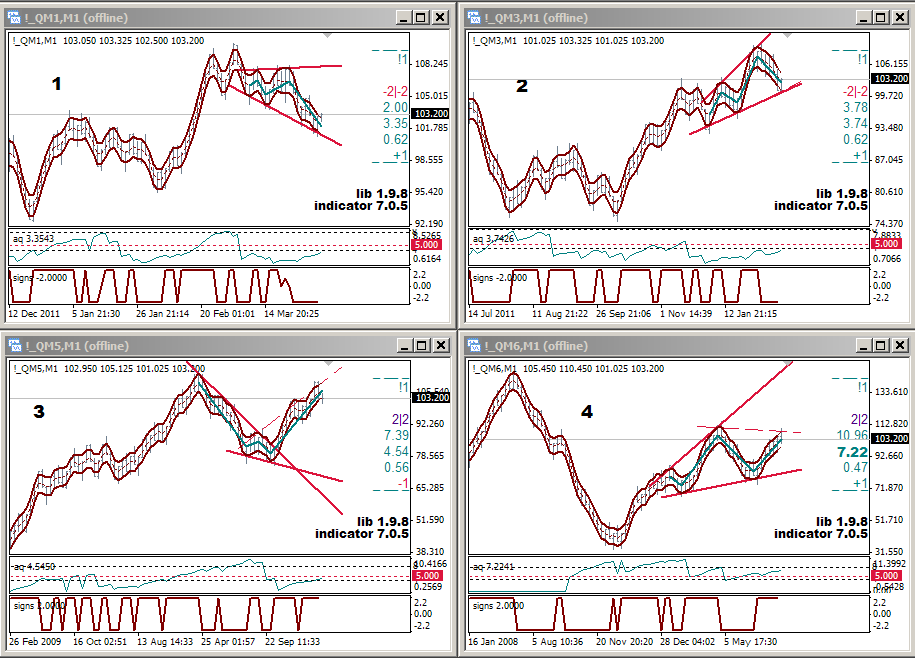
OIL

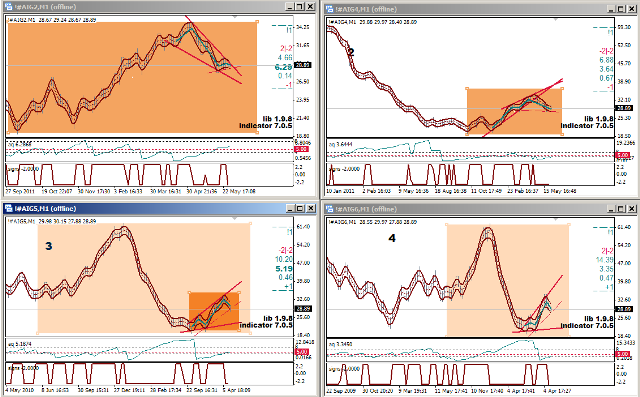
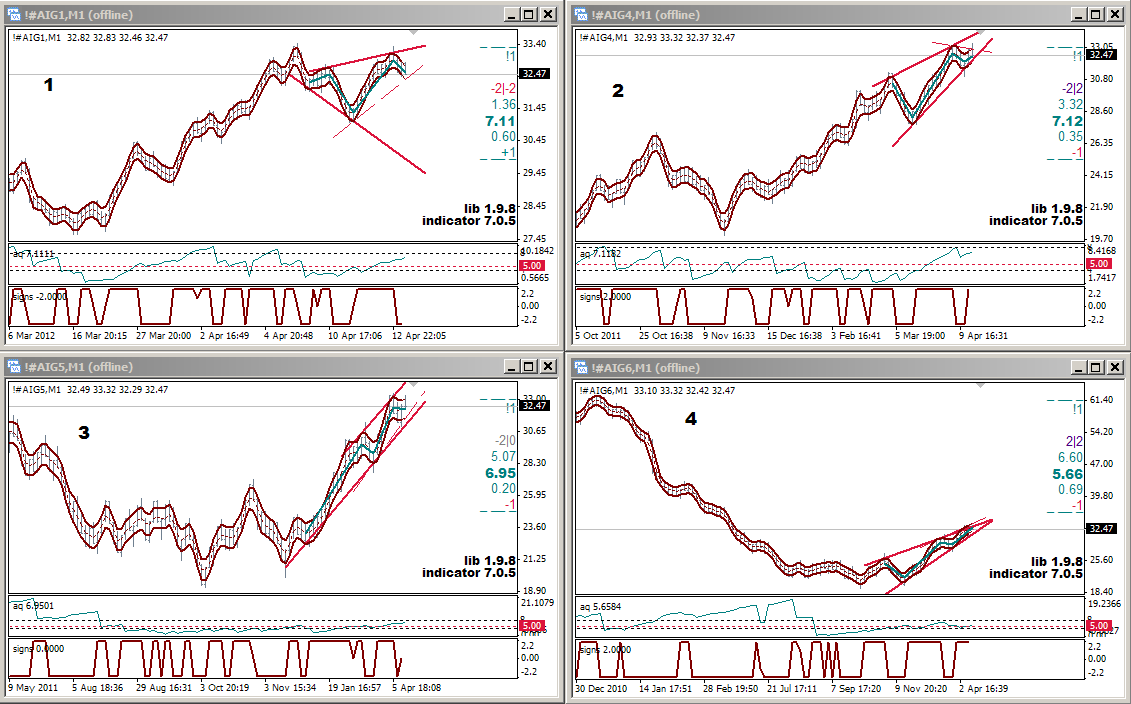
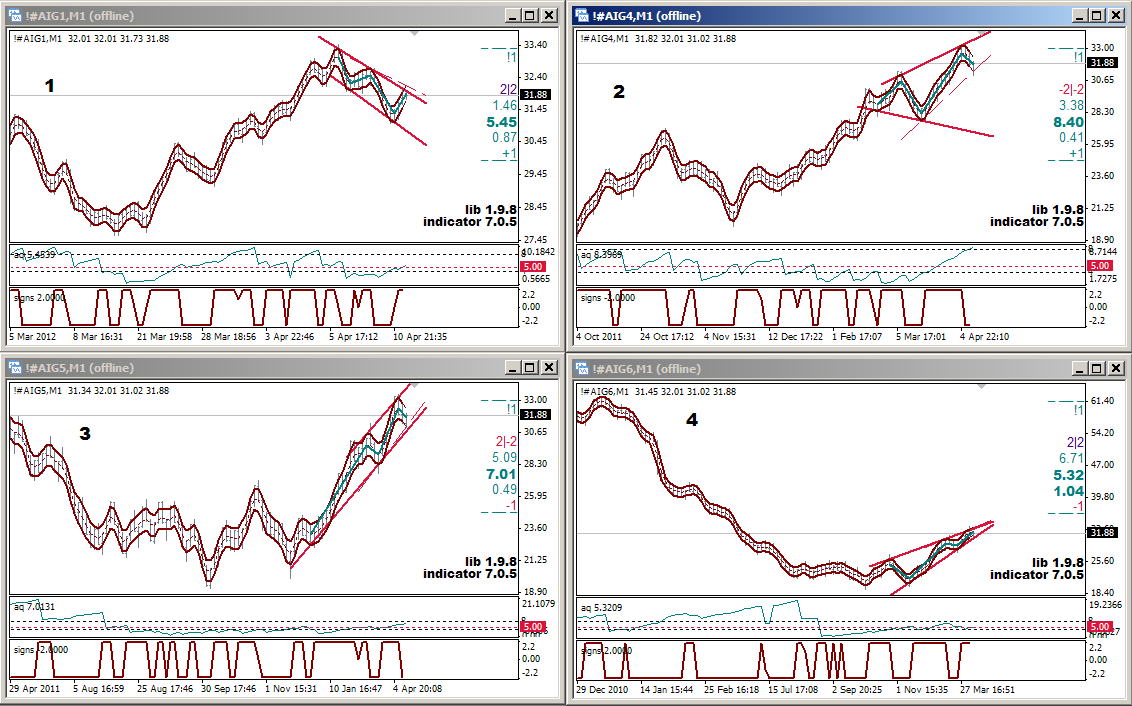
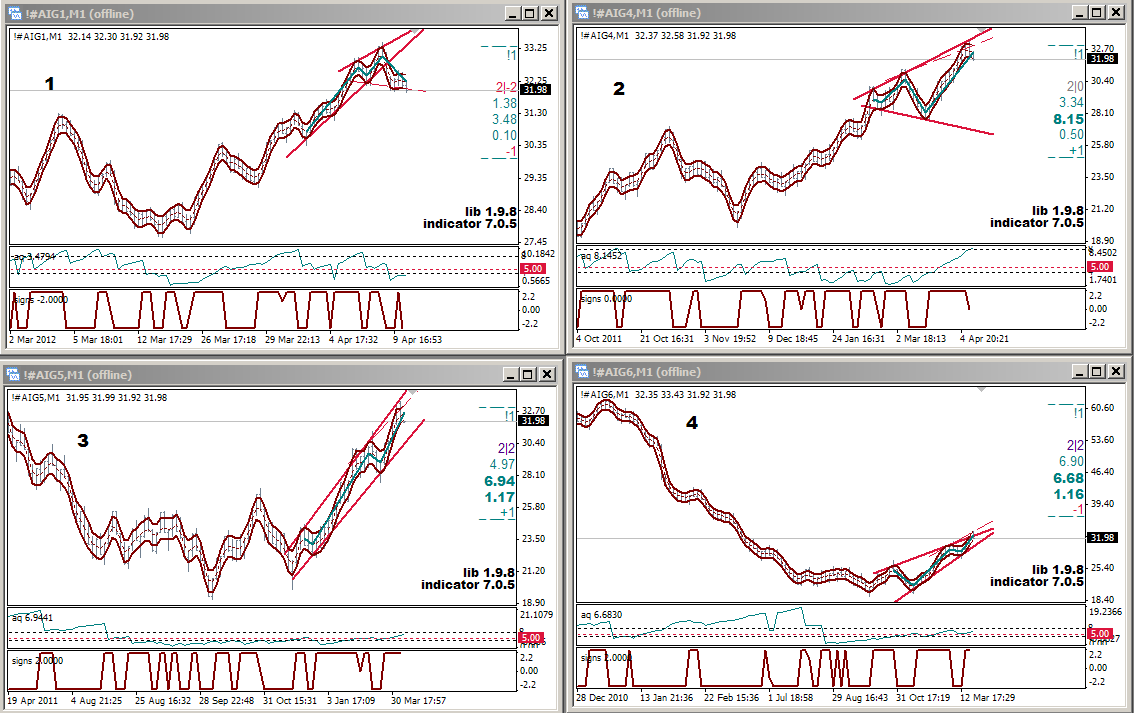
AIG

Price Flow Theory (PFT) and the space of the scenarios

Sometime is very important to generate probable scenarios for upcoming process options. Exact answer to question: «why is it so important?», we will get later. Now let’s consider how easy and natural we can generate all possible uninterrupted scenarios using basics of PFT and Price Flow analysis (PFA) technique.

In general case «space options» for price flow has place between «to continue» or «to u-turn». «To u-turn» later and now — is (topologically) the same scenario. Obviously any channel will be u-turned somewhen. So all scenarios in PFA are (topologically) the same and difference is only in Quality of the channel and the influence to upper scales.

Please take a close look at the attached charts and try to imagine that almost all possible options are limited by marked lines.
Important that «continue» at one scale may be «u-turn» at the another.

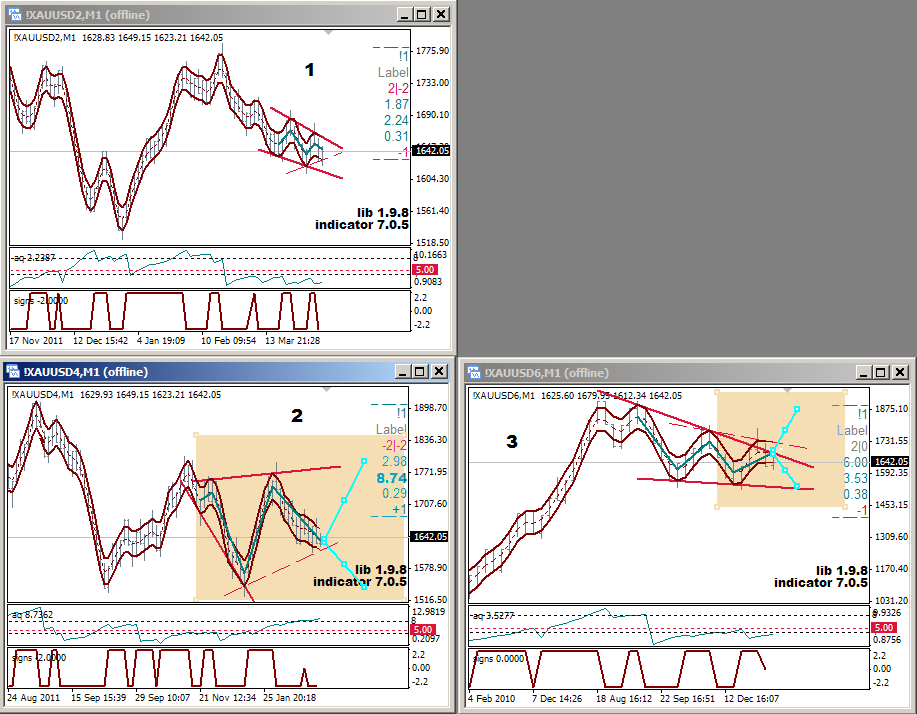
GOLD:


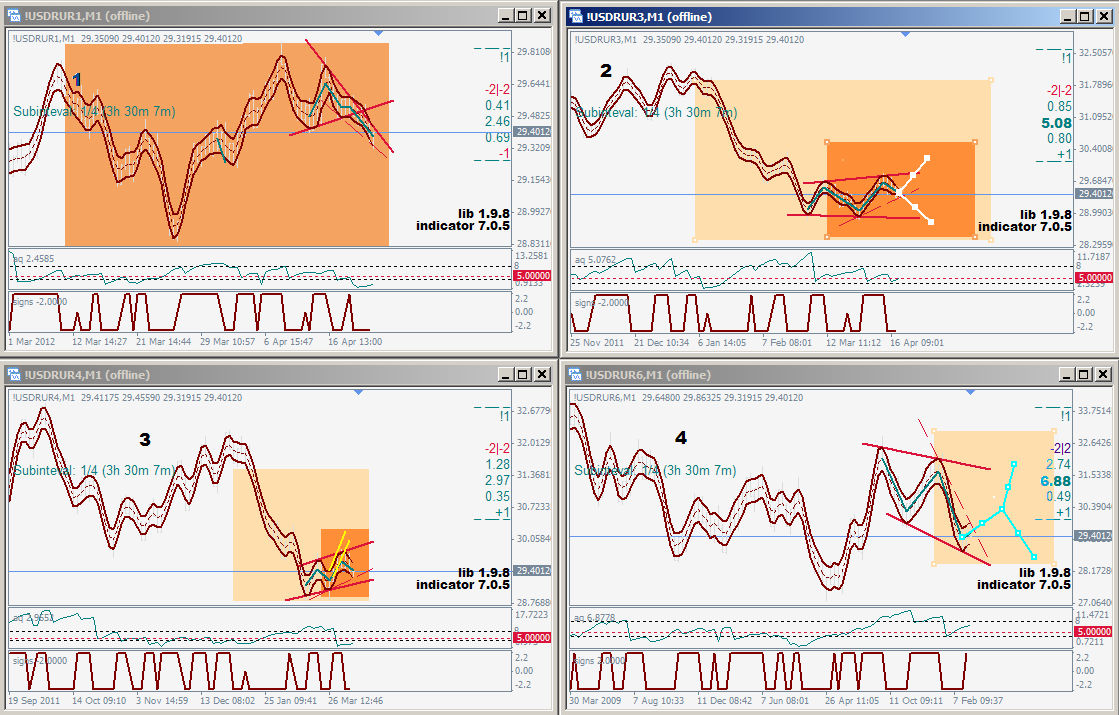
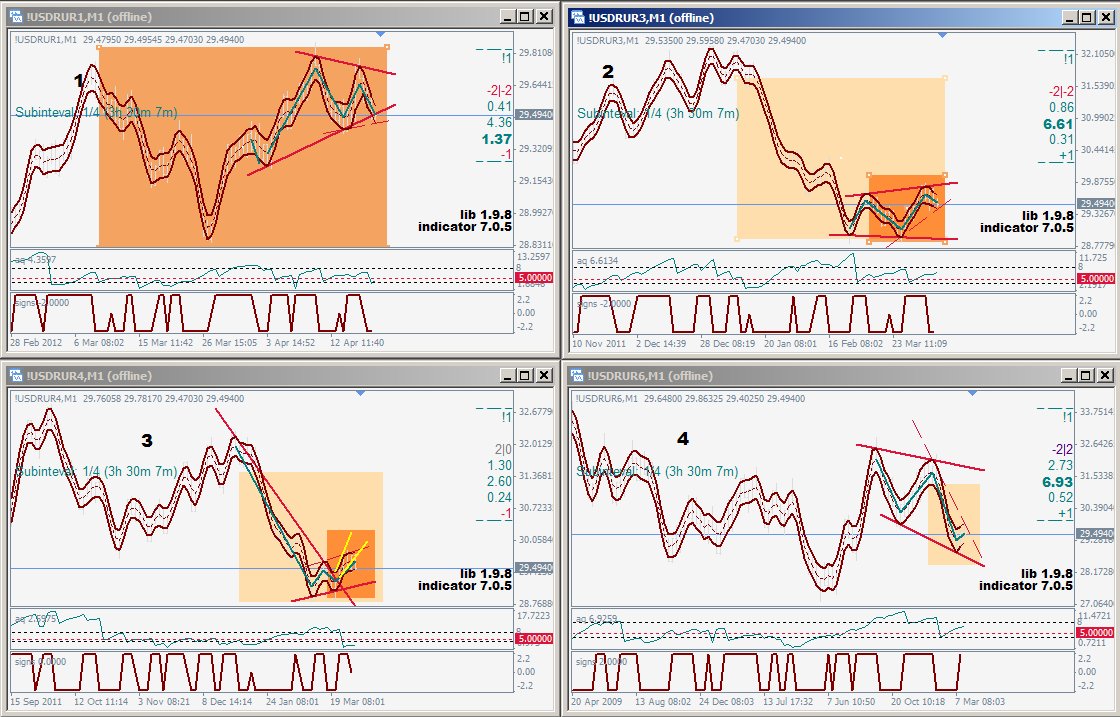
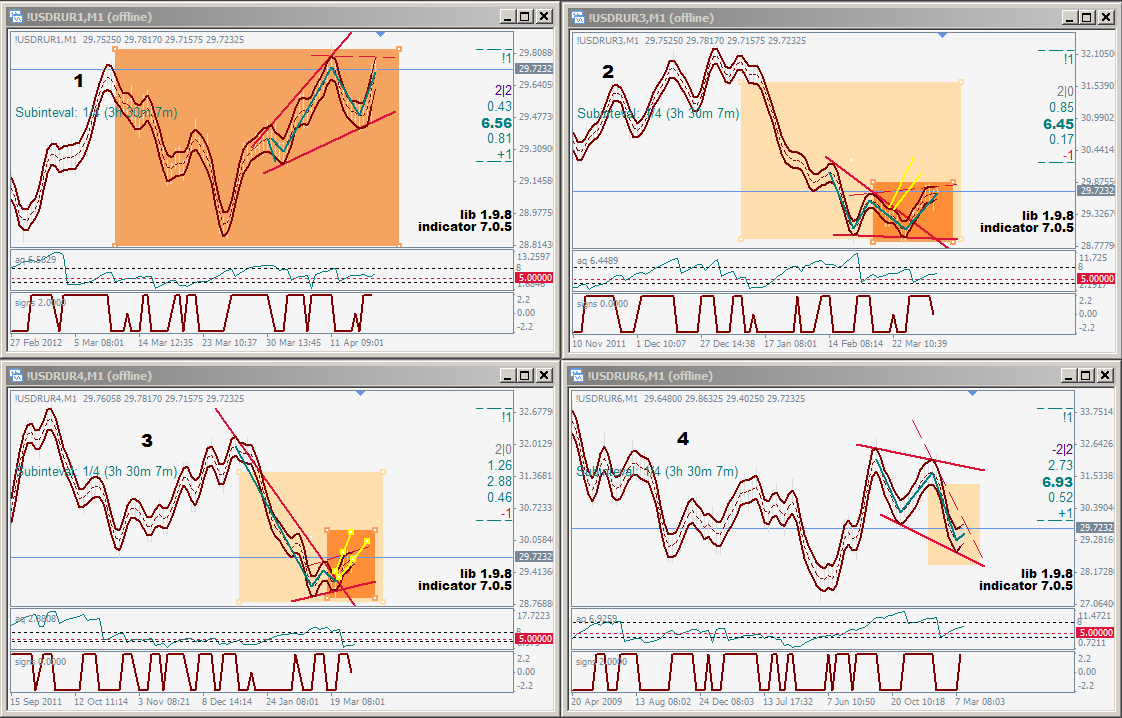
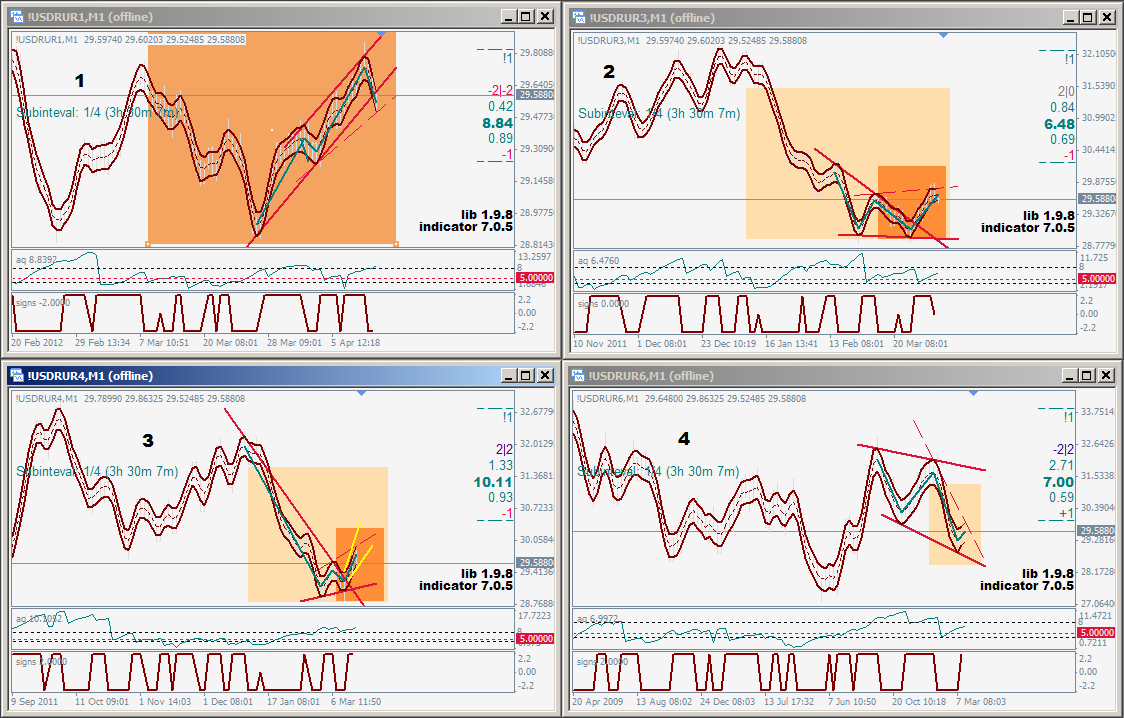
RURUSD


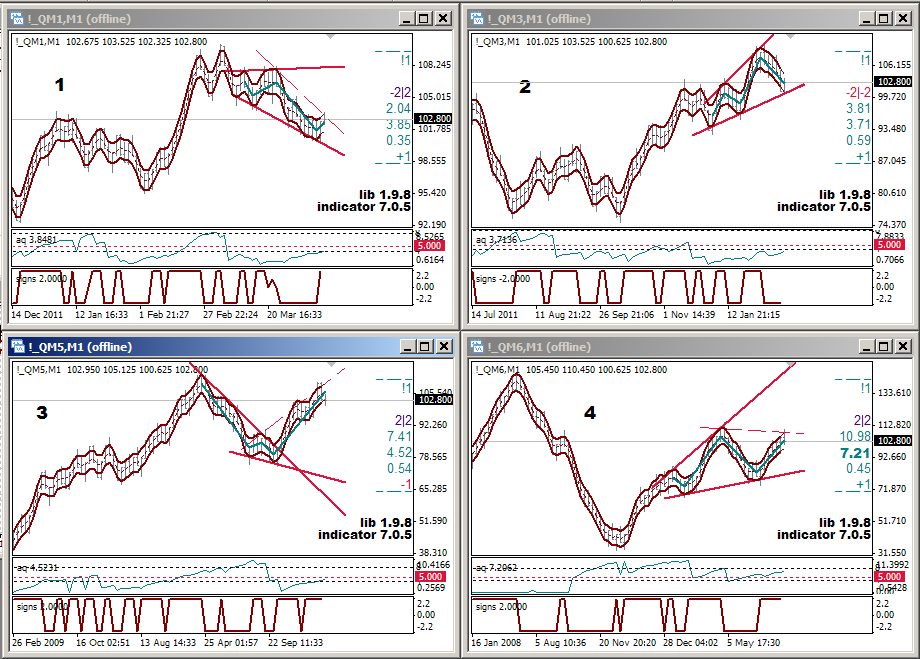
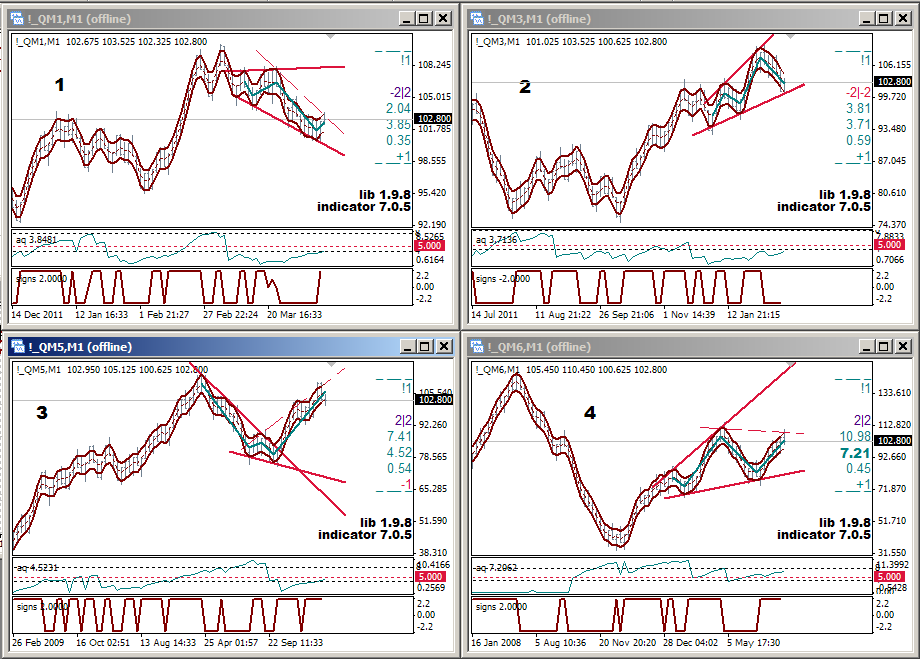
OIL

April 20, 2012

S&P — Up with Dw potential, EURUSD — Dw with UP potential, AAPL — Dw, SBUX — Dw?, AIG — Up?


what’s new in the Zoo

for 2 days it must not be too many news just few

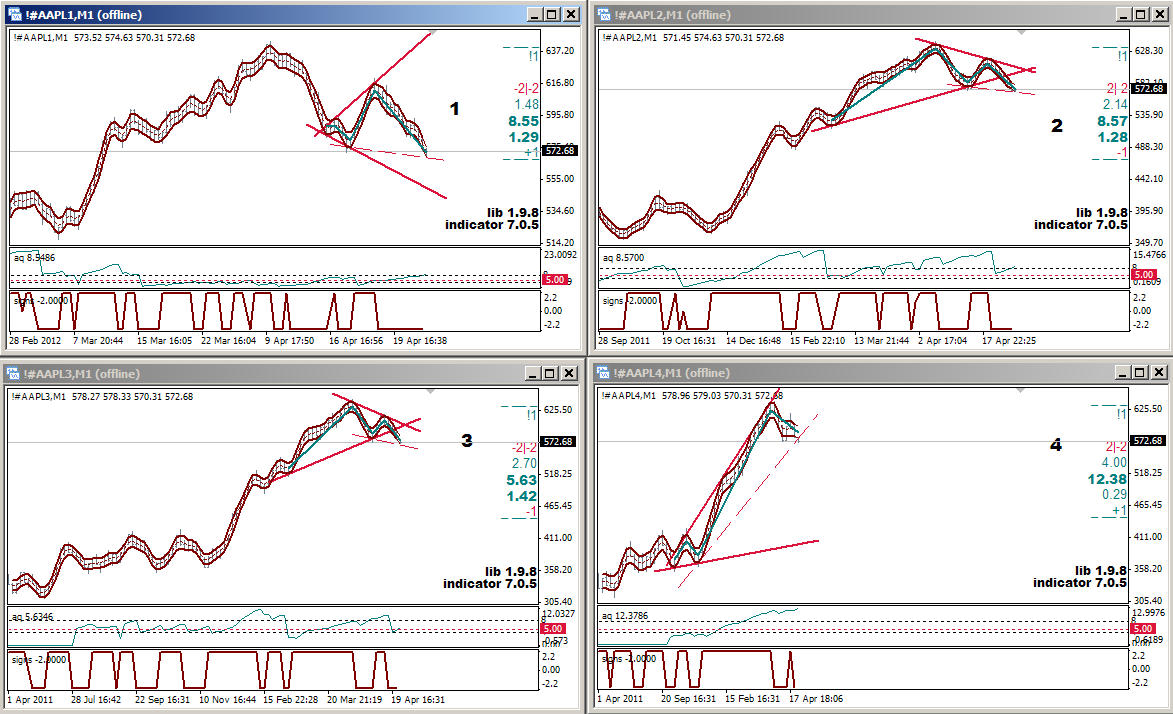
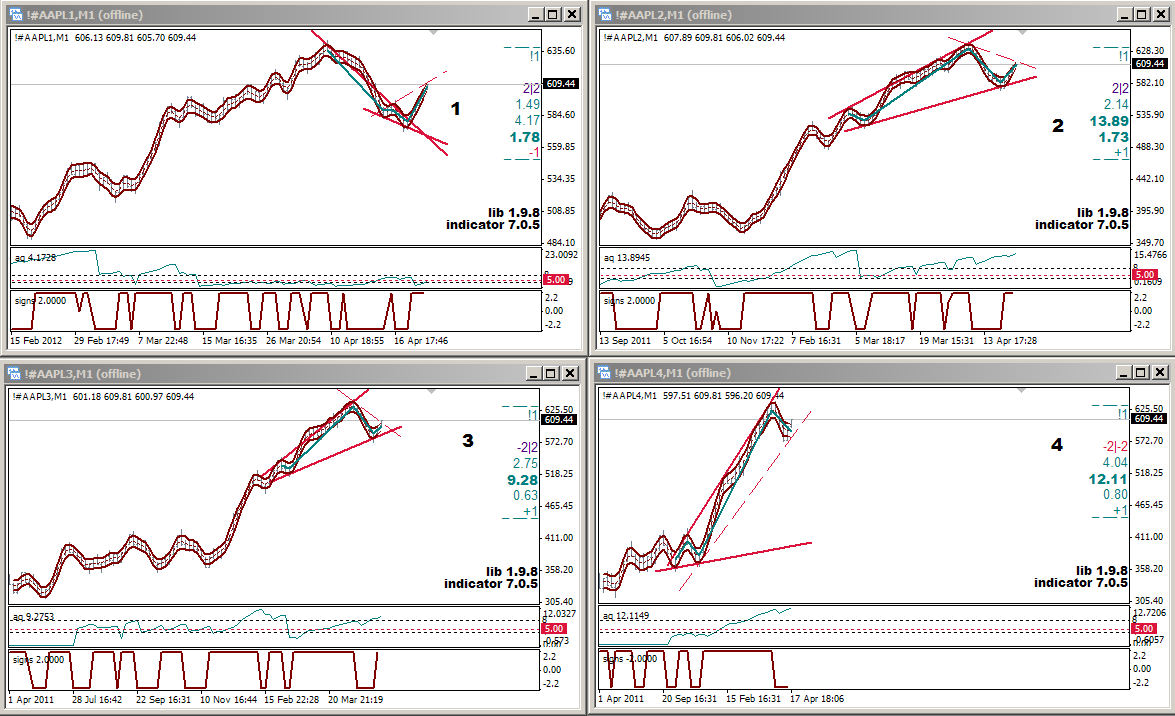
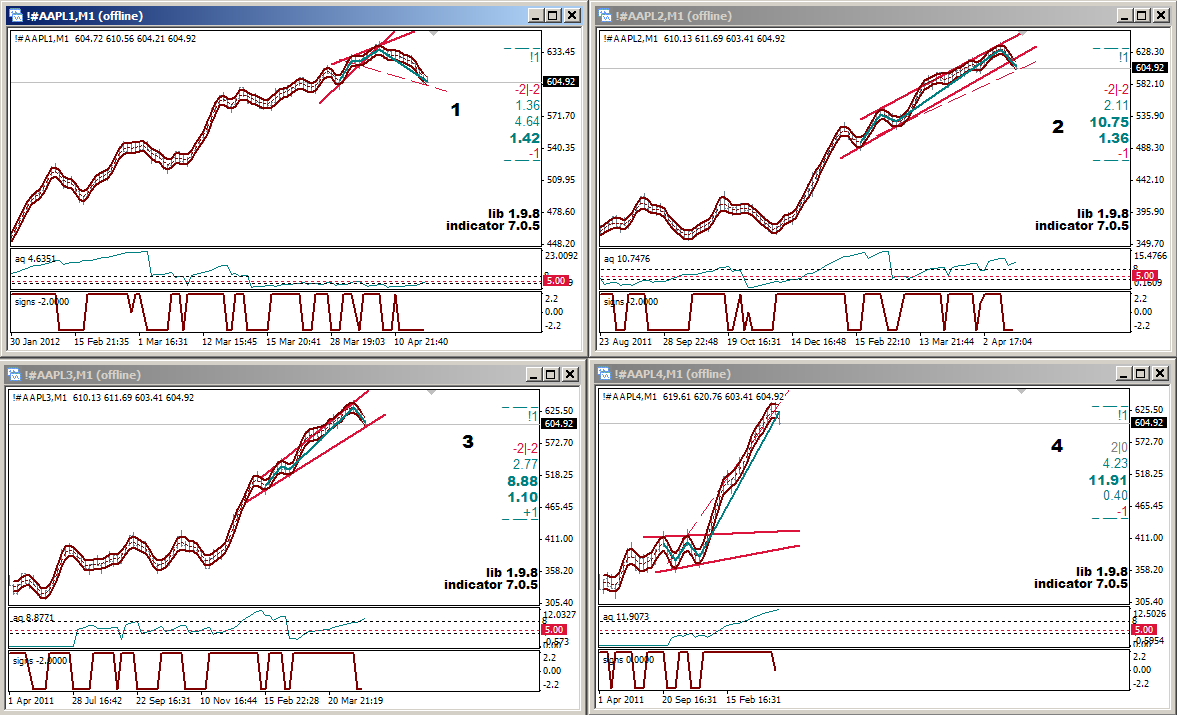
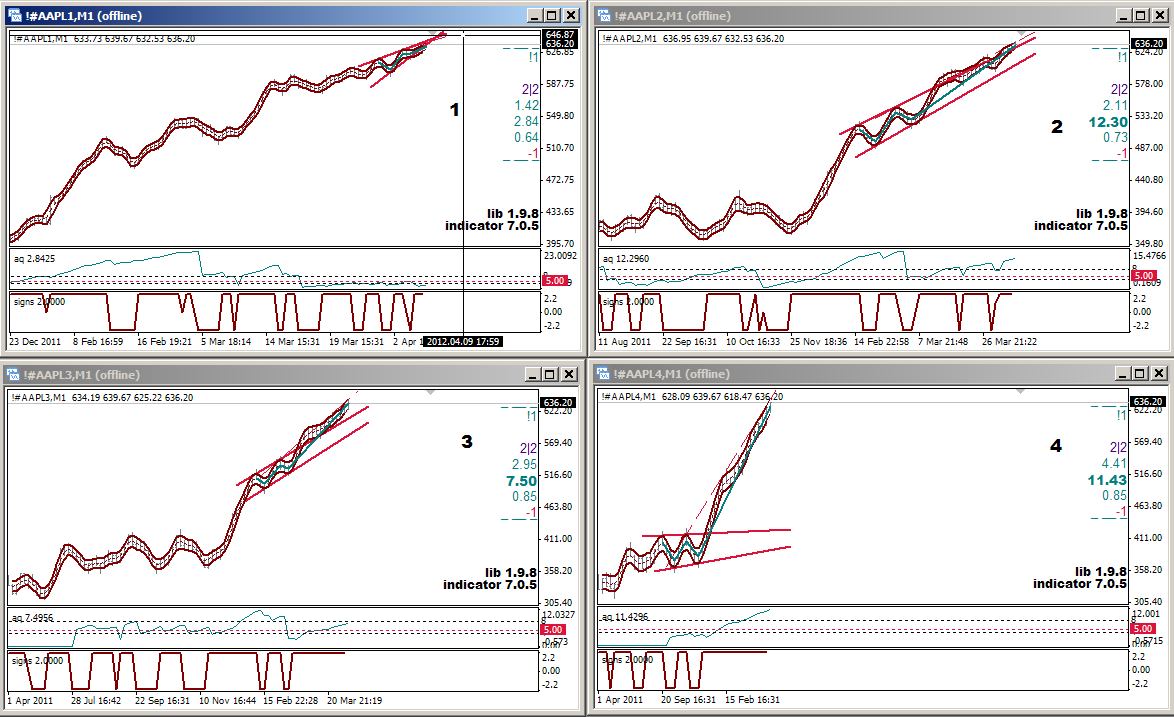
AAPL — it’s not «u-turn down» yet — it is a first stage of the destabilization on the way Up


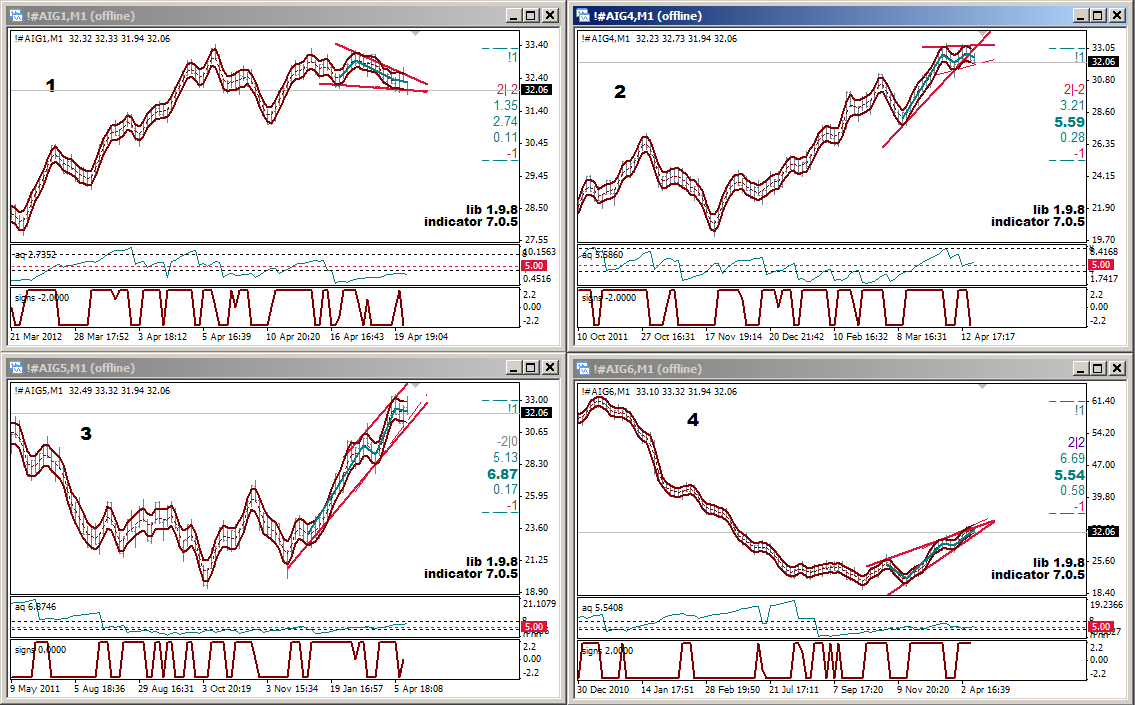
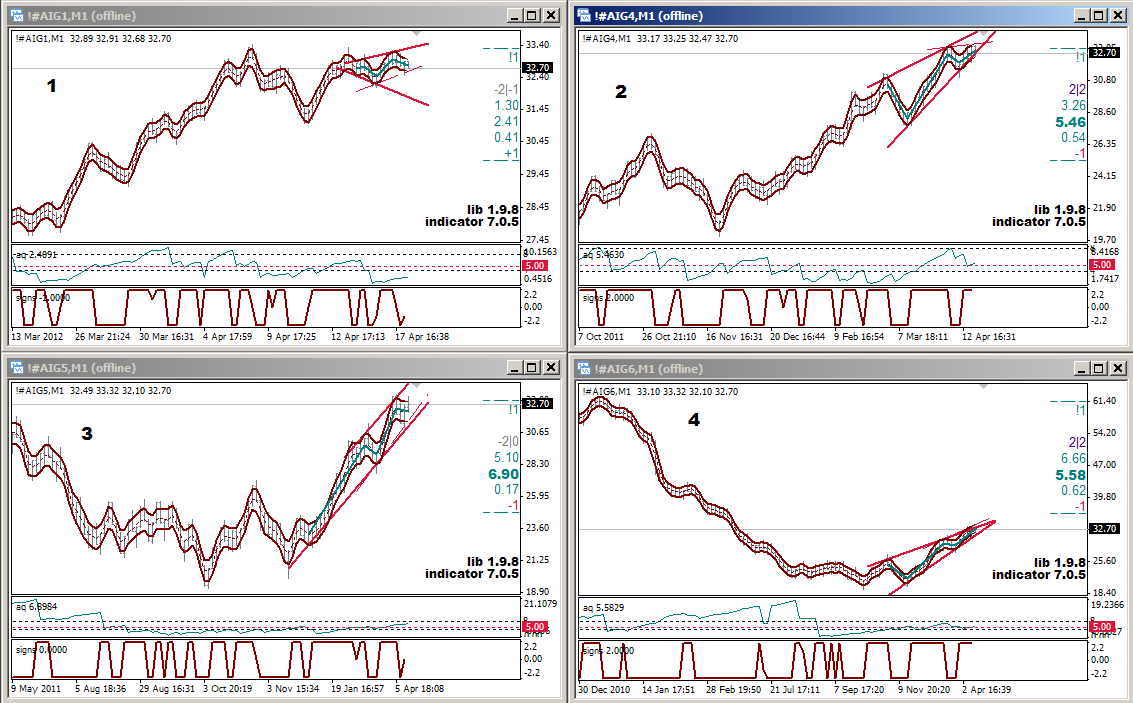
AIG — all scales large then 2 are stable


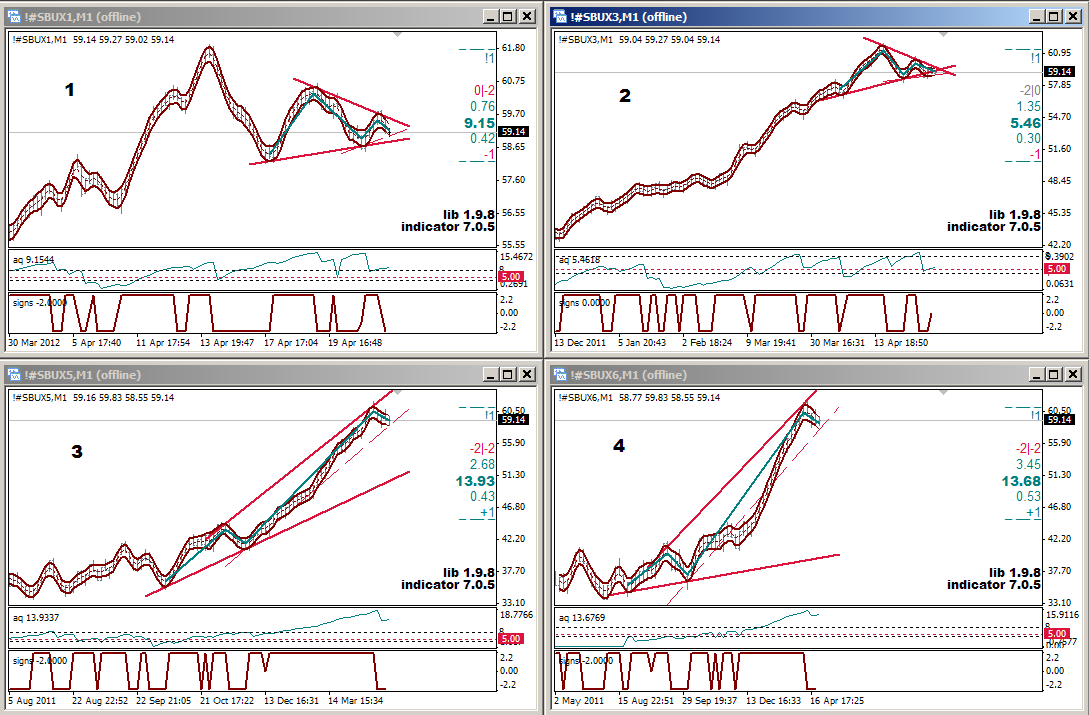
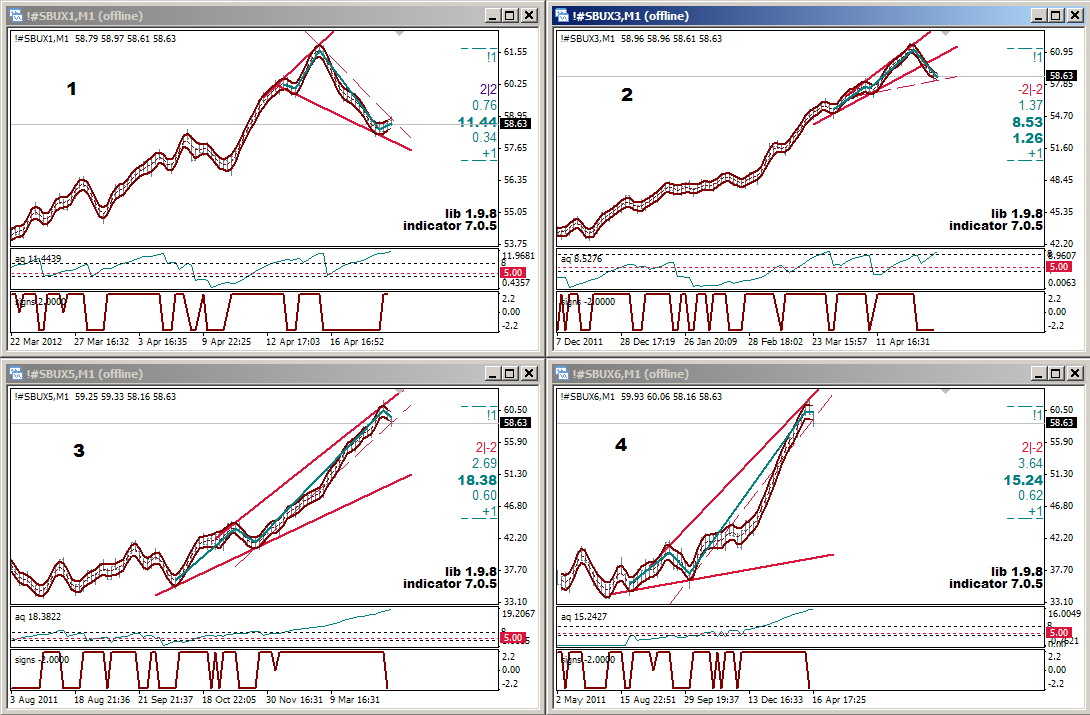
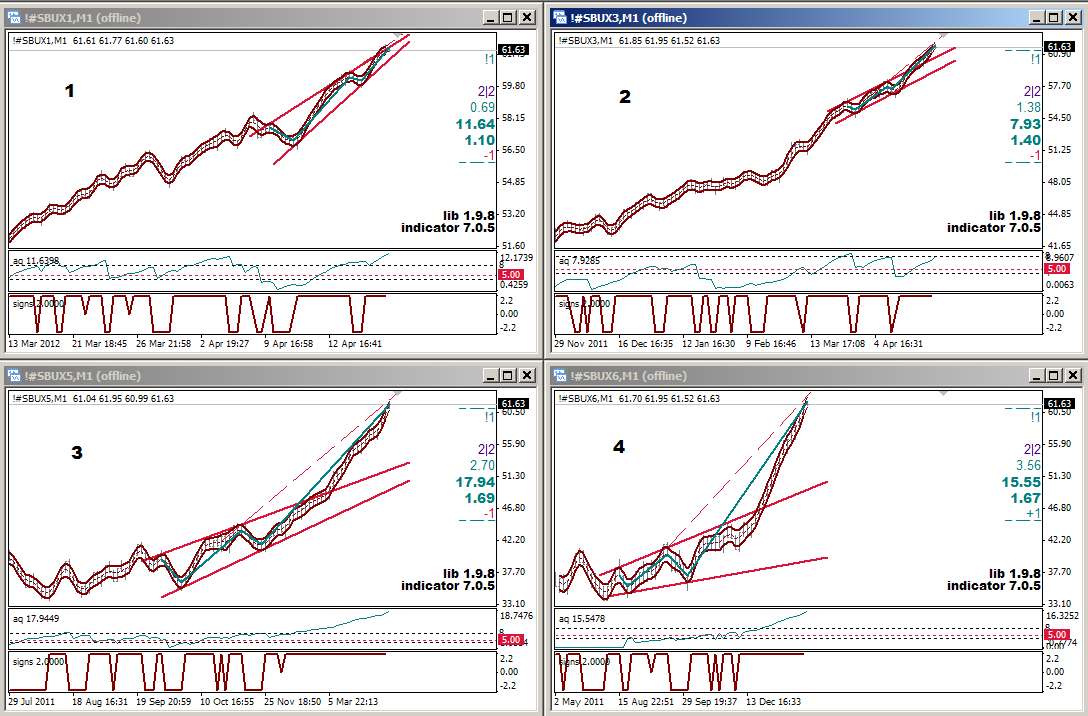
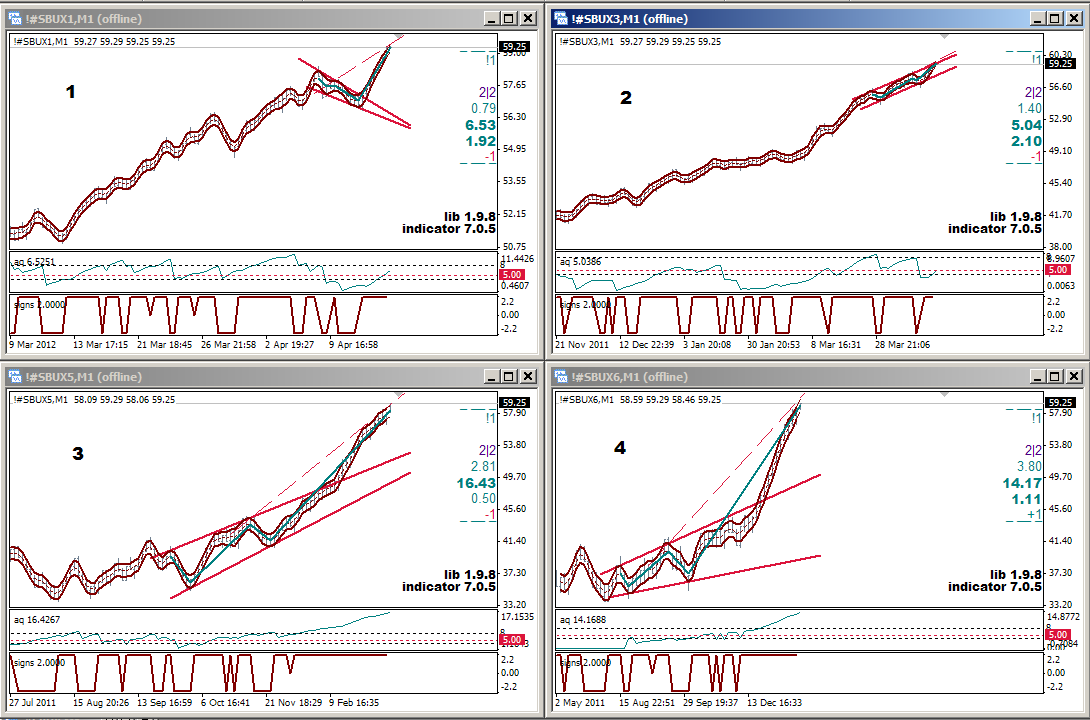
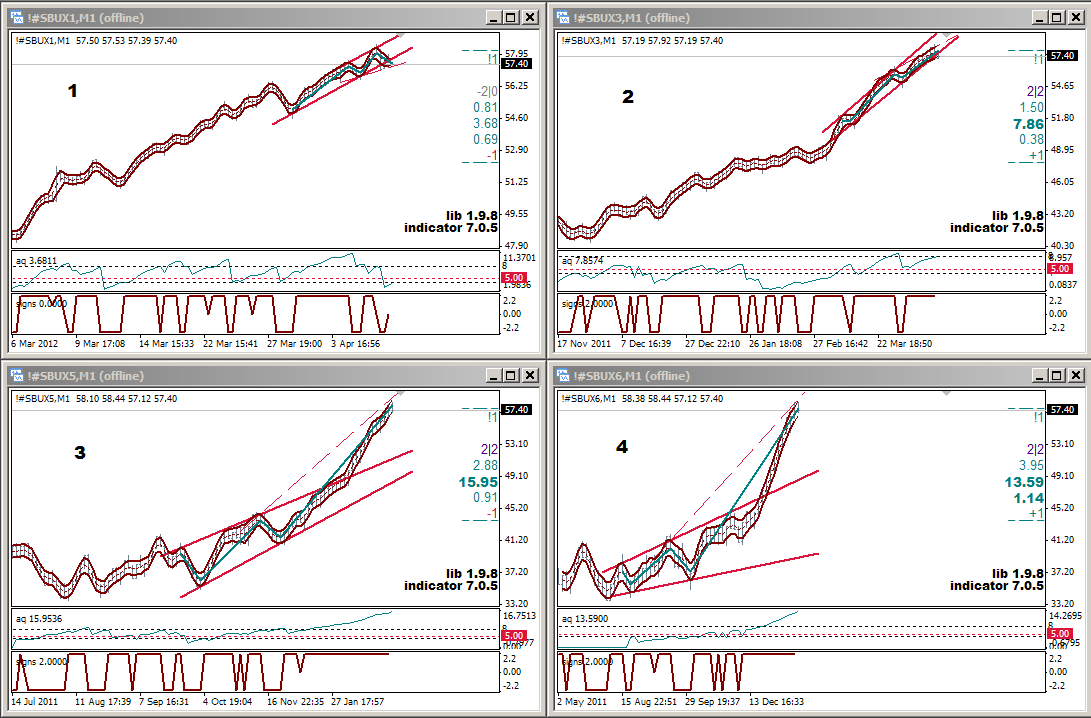
SBUX — Amplitude increase at scale 2 is very important. The future scenario depends on how this destabilization will be absorbed by the main flow at scale 4.


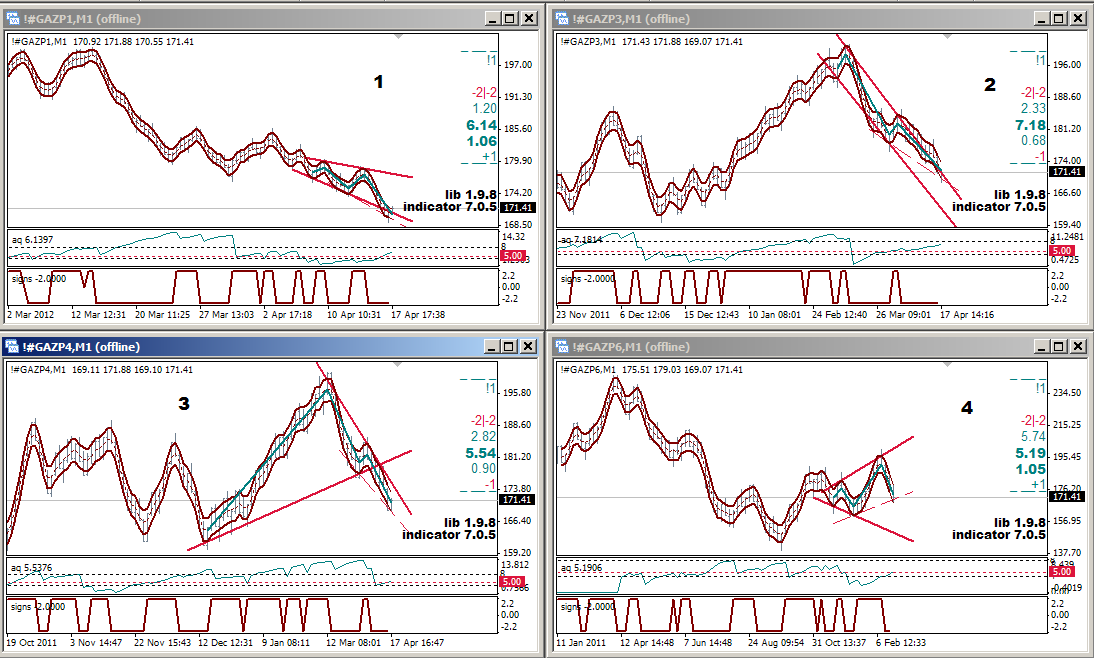
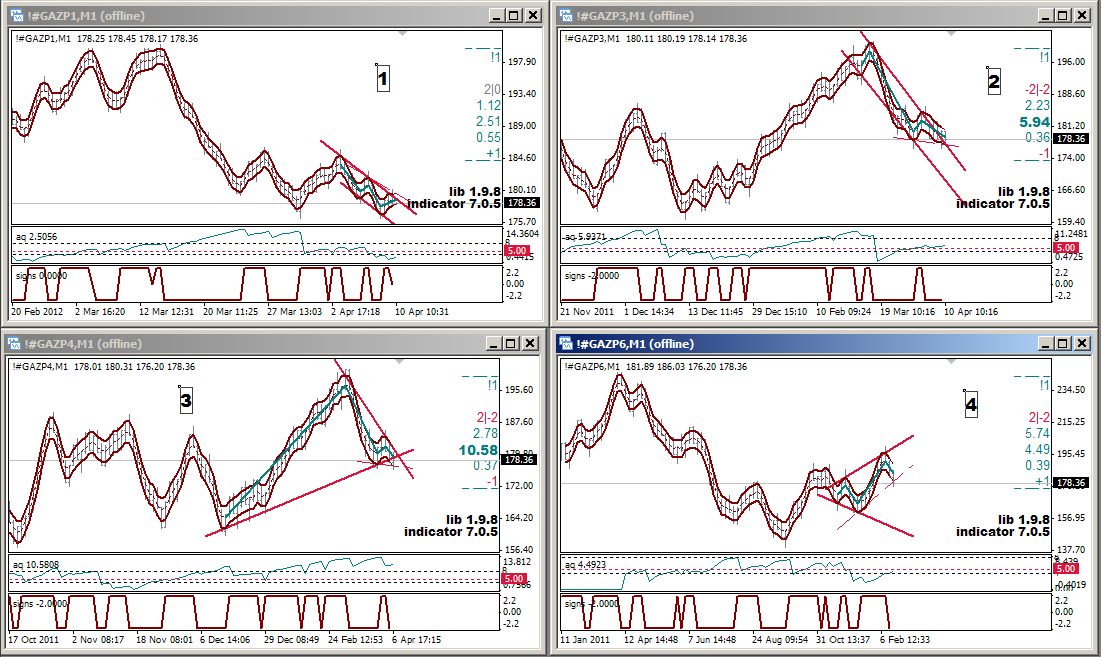
GAZP — destabilization at scale 1 probably cause the u-turn Up at bigger scales.


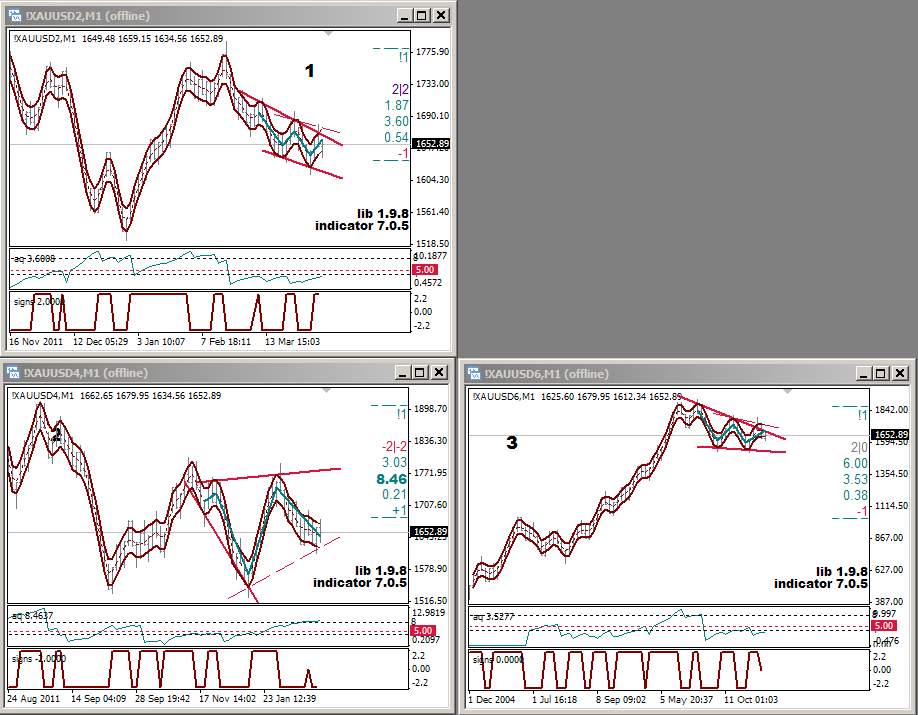
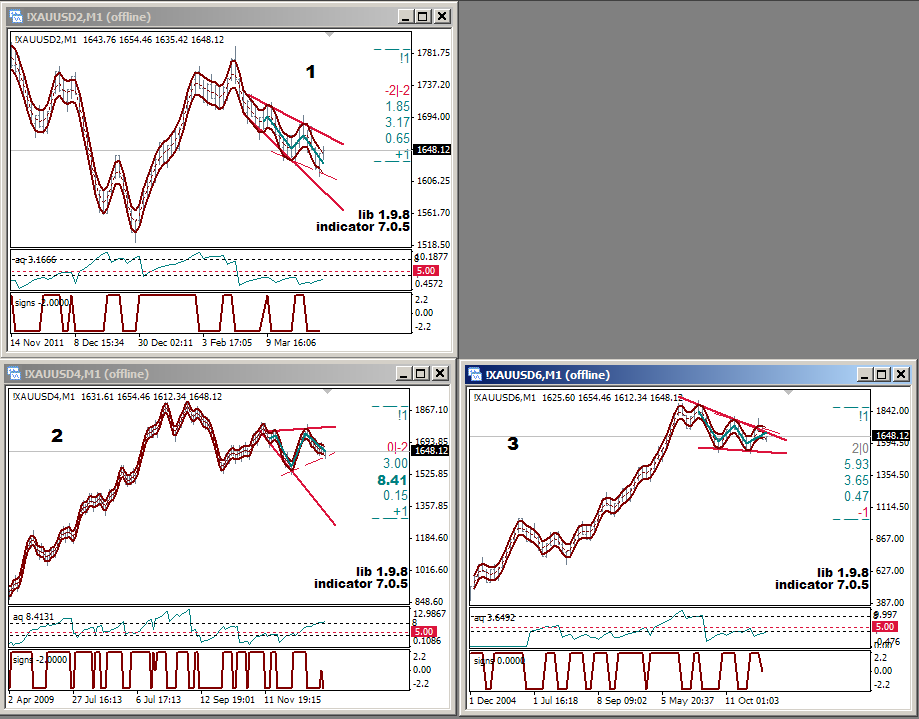
GOLD — not strong but presented signs of possible u-turn Up here has not been realized. Waiting.


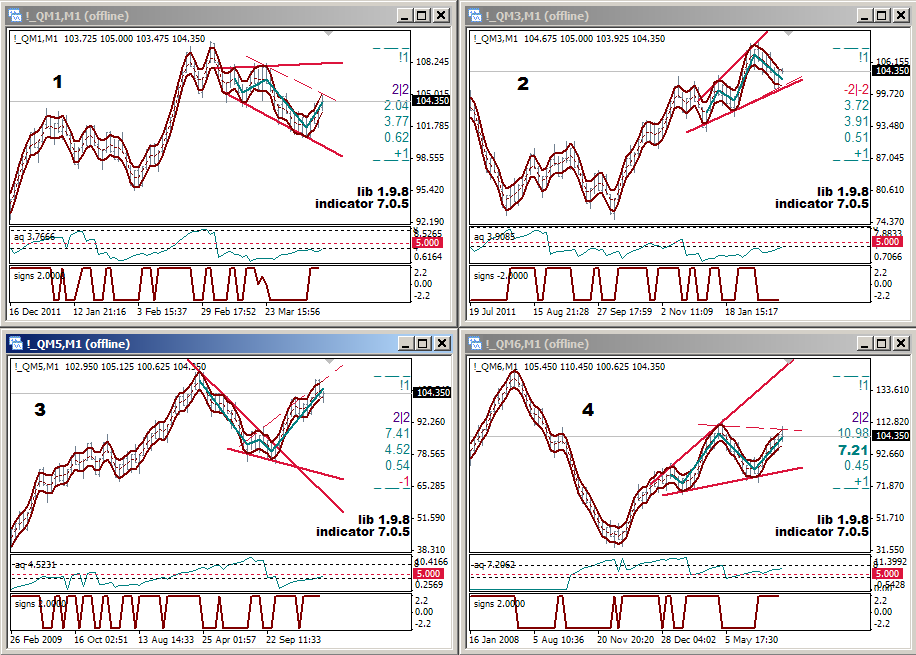
OIL — if flow at scale 2 will u-turn Up we can see clear destabilization and possible u-turn Dw at scale 4.


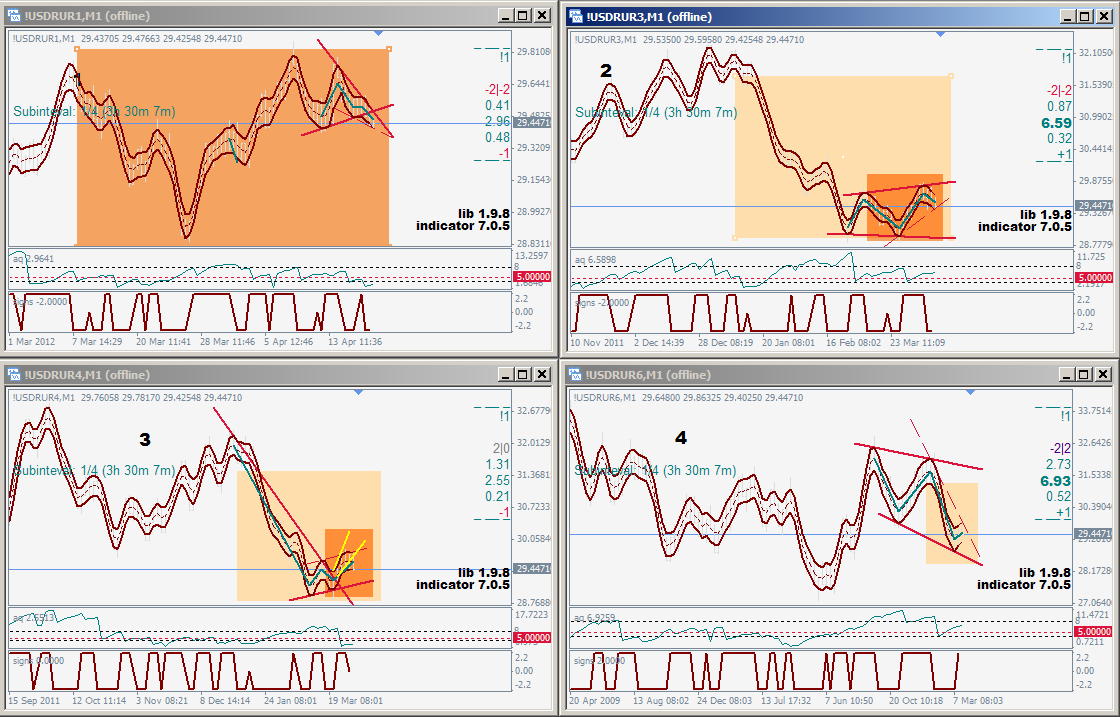
RURUSD — probably the time of the prediction is over: the process is starting to fill out the main channel at scale 4. Perspective at scale 4 is more for  continuing Dw with Amplitude decrease. Will see.

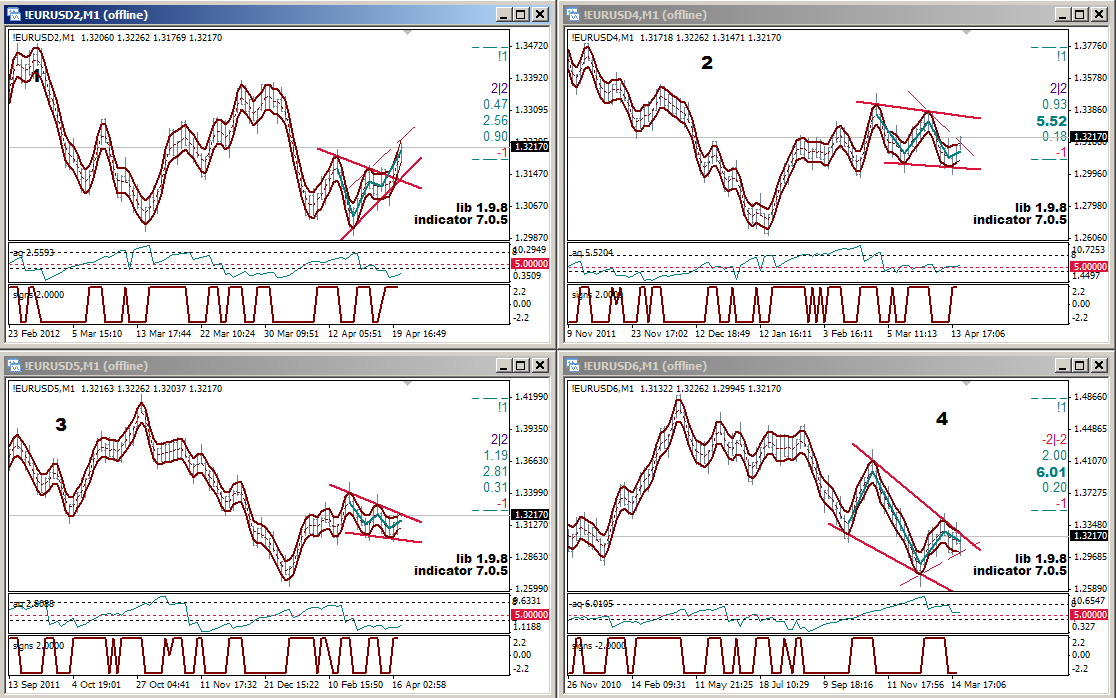
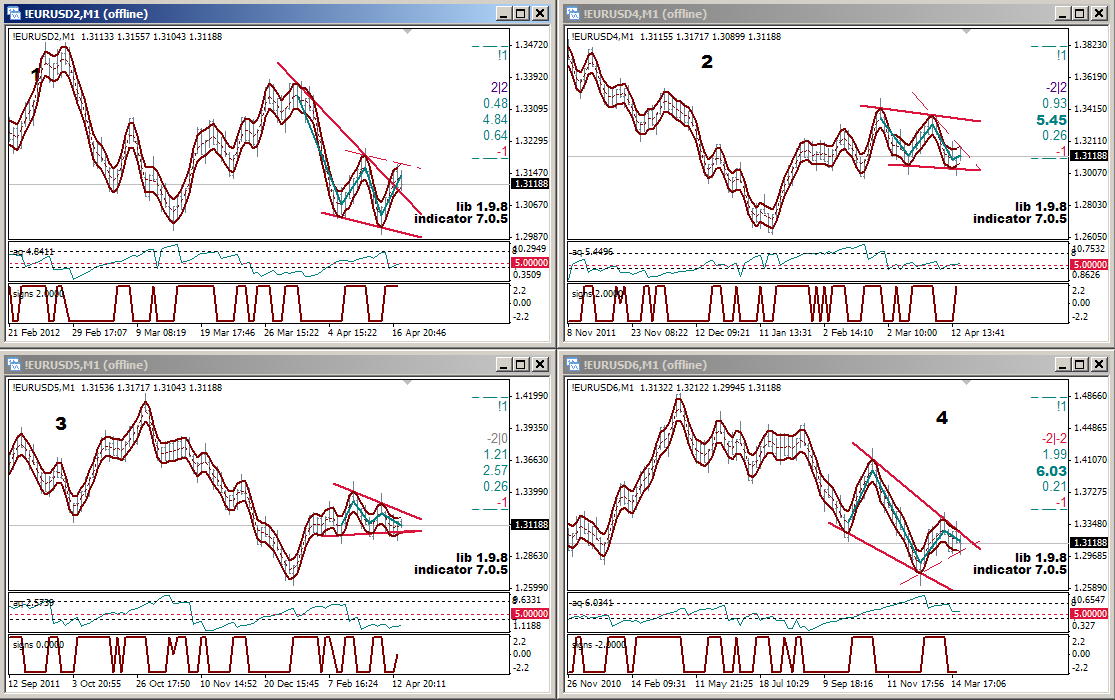
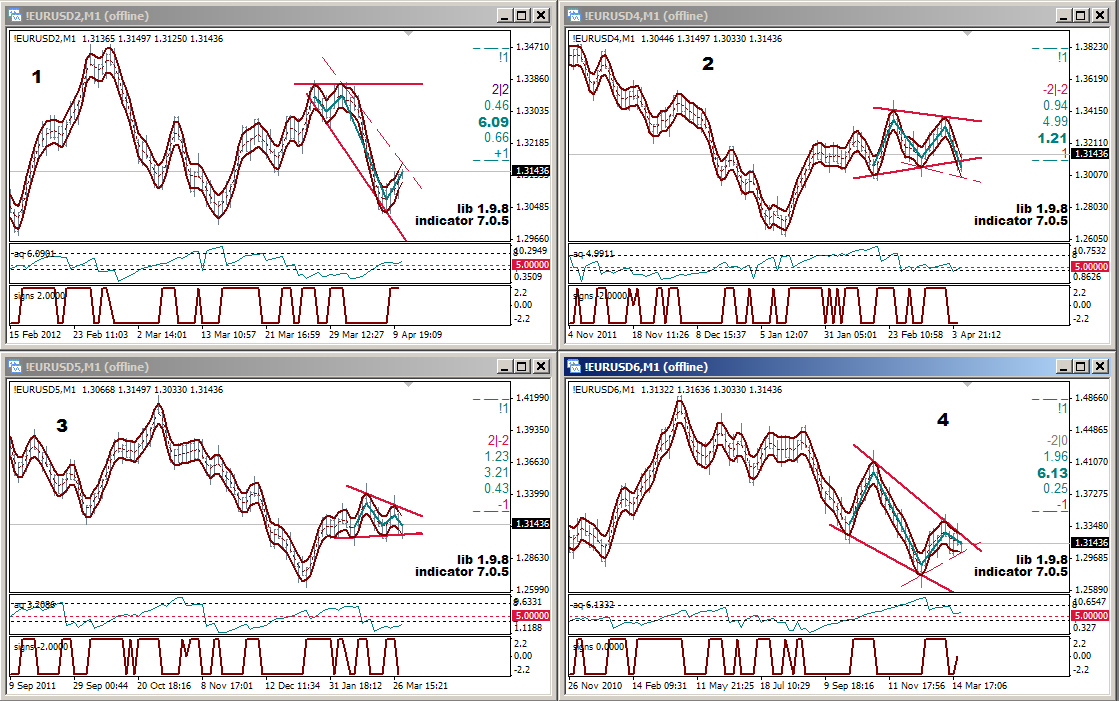
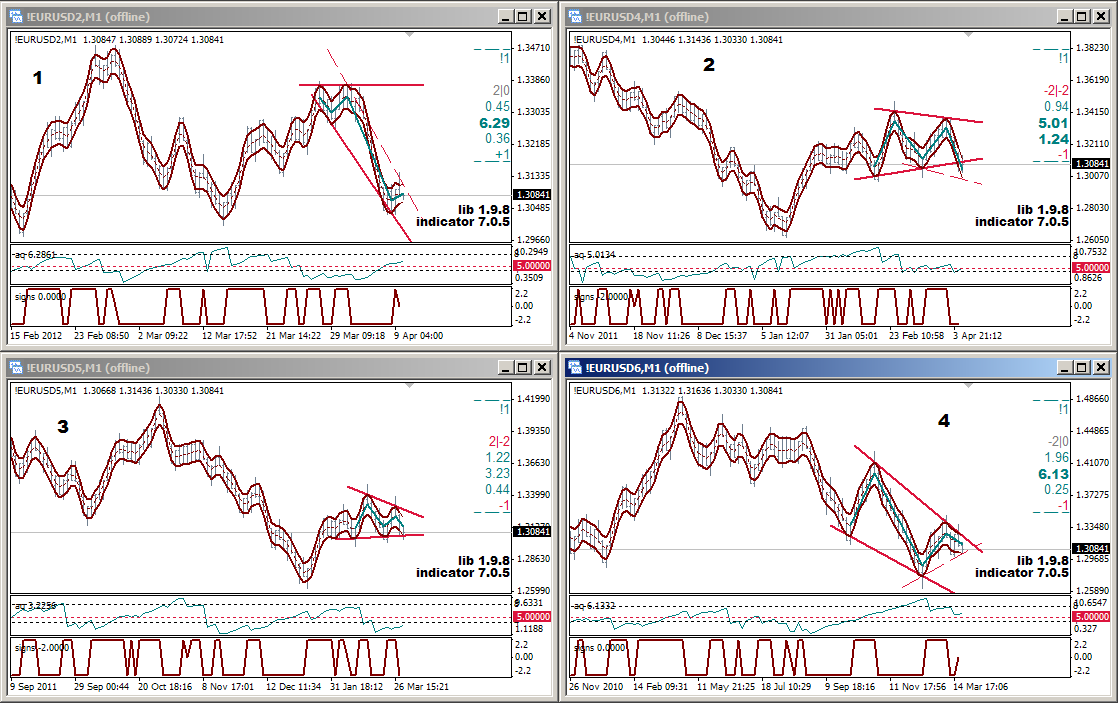
EURUSD — actually nothing new: the main flow is still Dw.


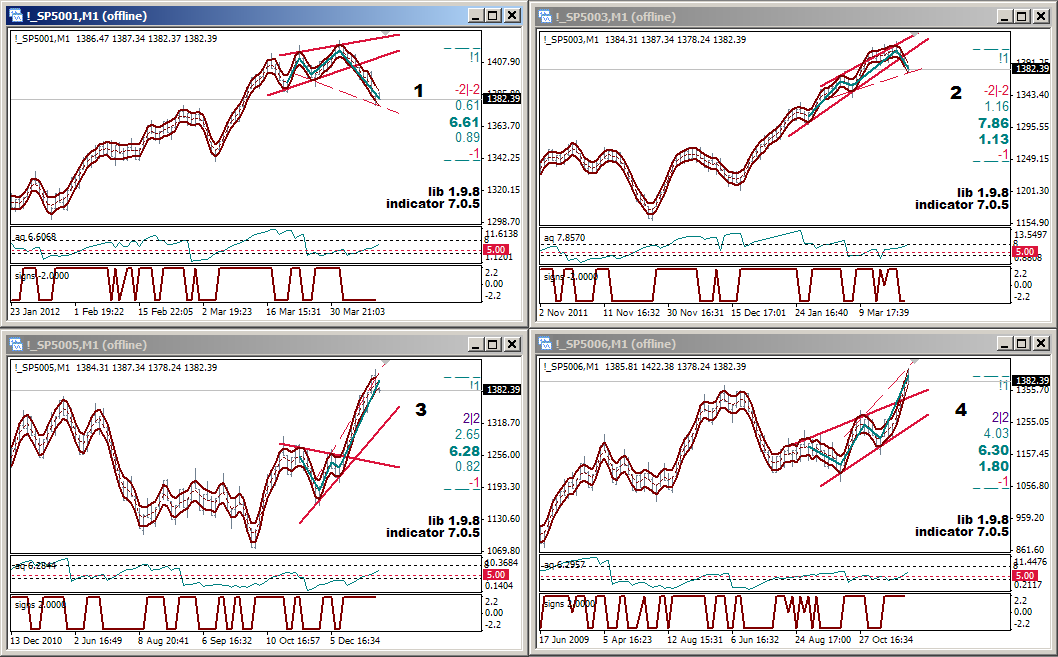
S&P-500 — as I’ve assumed 2 days ago: «easy prey» was taken and now we have more difficult «target» for «bulls» — to stabilize of destabilized flow Up at scale 2 and to continue the process at scale 3 without significant pullback. Configurations art all scale are very clear that usually means that market is under strong pressure and allow for outside observers to understand what is happening.


end of the week charts

S&P500 — scale 3 and 4 are still UP

Easy prey for the «bulls», locally: to turn scale 1 up and pull out all the train up: very attractive and seems to be an easy victory and «they» most probably will do it. But it’s not the final barier to the next level: Amplitude Increase at scale 2 — it is the next «point» which must be overcome.


GOLD — no changes

Starbucks is the Best 🙂

AIG is the same as S&P500

AAPL — is ready to some pullback?

OIL — no changes

Continuation of the scenario

Ready to turn Up at scale 2?

EURUSD — no changes

так на фига ж козе баян?

в общем плане предлагаемый ответ полностью соответствует народной шутке, ибо нет больше смысла ни в какой шутке, чем в народной 🙂

Основной прием применения Теории Потока Цены для управления своим поведением на бирже основывается на том, что будущие процессы зарождаются внутри существующих и видны «немного заранее»; надо только правильно сфокусировать свое зрение (т.е. настроить цифровые фильтры) и все станет сразу хорошо видно; параллельно, получив наилучшую картину, можно оценить реальную (а не среднестатистическую) степень неопределенности (т.е. неточности измерений) параметров наблюдаемого процесса, например, величины скорости и знака направления.

От традиционной статистической обработки предлагаемый подход отличается тем, что вместо придания большего веса наиболее часто встречающимся значениям — наибольший (и единственный!) вес присваивается всего двум крайним значениям: миниуму и максимуму за интервал, а остальные — игнорируются.

В результате отклоняется исходное положение статисти: возможность получить более точное измерение путем увеличения количества измерений, а центральная предельная Теорема вообще выпадает из применения, ибо она не используется, т.е. в принципе может быть и не верна. А что взамен? Вместо этого, т.е. вместо описания процесса, как среднего значения с отклонениями, вводится представление процесса, как диапазона, изменяющегося во времени, т.е. канала. Тут уместно показать это различие графически.
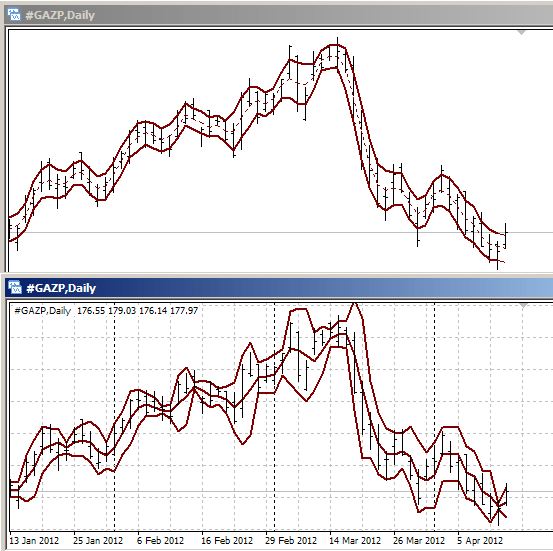
Думаю, что это достаточно показательное сравнение подходов описания. Видно, что и среднее ничего не описывает и среднеквадратичное тоже. Другое дело — почти равномерный канал. и направление понятно, и степень неопределенности.

И конечно, я не выступаю против применения статистики вообще. Но когда речь идет об информационно пересыщенных временных рядах, тут можно найти и описание получше. Именно описание динамики. «В статике» статистика работает лучше.

И что мы получаем в результате? Комфортноее описание и удобный инструмент для измерения. Если это принять,, то тут-то  и начнется самое интересное: изменится ситсема оценок происходящего, динамика перестанет казаться такой уж случайной, станут видны процессы внутри процессов (подводные течения), которые и приводят к последующим изменениям.

Например:
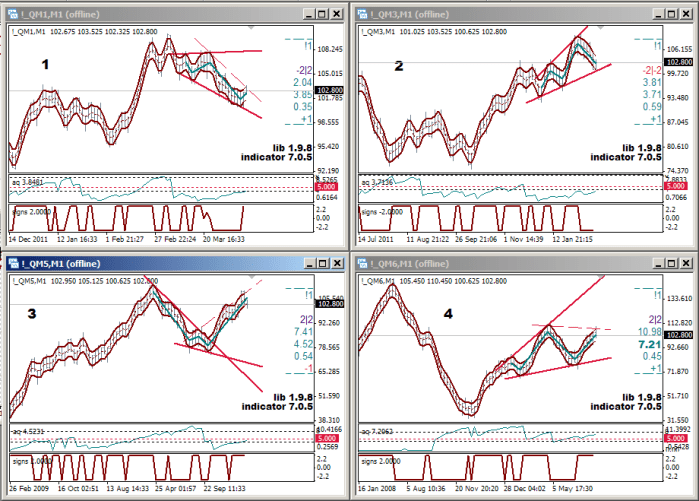
увеличение амплитыды на масштабе 2 является признаком дестабилизации рсота на масштабе 3 и вероятнее всего приведет к развороту, что будет означать разворот на масштабе 4. Но разработка такого рода сценариев не является самоцелью, а возможность понять, какой именно сценарий развивается в настоящее время.  Т.е. «рост на масштабе 4, который начнет прекращаться, если произойдет разворот вниз с пробоем на масштабе 3.»

Как этим воспользоваться конкретно — это уже предмет техники применения, который будет рассмотрен далее.
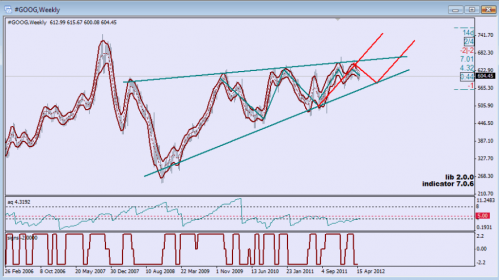
few new charts for April 12, 04 am EST


all new charts at April 10, 04 am

USDRUR — continue the flow UP; now we can have almost full picture of turn up at scale 4

GAZP

AAPL — no changes, stable

AIG — near turn dw

OIL — no changes

SBUX — light destabilization at scale 1

SP500 — scale 1 & 2 — breakout down

GOLD — almost no changes; probably «not yet»

EURUSD — no changes yet